Olde Towne Slidell AC Repair. HVAC That Speaks OTPDC Fluently.
108 designated historic buildings sit inside the Olde Towne Preservation District. Any exterior HVAC work on any of them needs a Certificate of Appropriateness from the OTPDC before a single fastener touches a wall. Aircendro dispatches technicians who know the district guidelines by section and who have shepherded a lot of CA applications through the process.
Everyone Else Treats Olde Towne Like It Is Regular Slidell. It Is Not.
The Olde Towne Preservation District Commission was established in 2003 to protect the architectural character, urban fabric, and history of Slidell’s oldest district. In January 2018, the Commission formally designated 108 buildings as historic. If your home is on that list, or is a contributing property inside the district, any exterior HVAC change legally requires a Certificate of Appropriateness before you can pull a building permit.
Most HVAC companies in Slidell learn this when they show up to install a condenser on the front elevation of a Second Street bungalow and get a stop work order from the city Planning Department. The OTPDC office at 250 Bouscaren Street handles the CA process, and the Design Guidelines document has a specific section, H. Mechanical Systems, that governs how HVAC installations must be handled in the district.
Aircendro dispatches technicians who read that section as part of their training. Response time from our office at 2053 Gause Boulevard East to any Olde Towne address runs ten to fourteen minutes. Same day dispatch for repair calls seven days a week, and CA-ready documentation prepared for any exterior work that needs Commission review before installation begins.
Call Aircendro +1 (985) 214-2718
The Four Step CA Process, Written From Actual Experience
Any exterior alteration to a contributing property inside the Olde Towne Preservation District needs a Certificate of Appropriateness before the city Planning Department will issue a building permit. Here is what the process actually looks like from consultation through approval. Aircendro handles this coordination for you when the work involves outdoor HVAC equipment placement.
Pre-Application Consultation
Optional but strongly recommended. Contact the Planning Department at 250 Bouscaren Street to walk through the proposed HVAC install location, line set routing, and screening plan before submitting. Prevents most rejections.
Complete CA Application
File the application with attachments: site plan showing equipment location, photos of the affected elevations, product cutsheets for the outdoor unit, line set routing diagram, and any screening or paint specifications.
Staff Review or OTPDC Public Hearing
Planning Department reviews first. Simple installations may get administrative approval. More visible or complex work goes to the full OTPDC public hearing for the technical recommendation and Commission decision.
CA Issued, Permit Follows, Install Begins
Once the Certificate of Appropriateness is issued, the building permit process moves forward. Aircendro schedules the install once permit is in hand. Typical total elapsed time is three to four weeks for a routine mini split retrofit.
Four Architectural Types in Olde Towne, Four Different HVAC Strategies
The 108 designated historic buildings in Olde Towne span roughly seventy years of Slidell architectural history. Each construction type carries its own structural constraints on HVAC work. The technicians Aircendro dispatches match the strategy to the building.
Shotgun Houses
HVAC strategy: Central ductwork is not physically feasible because there is no attic or corridor to run supply and return lines through. Ductless mini splits with a head per room are the correct answer. Line sets route along the rear exterior wall, out of sight from Front Street.
Louisiana Cottages
HVAC strategy: Attic space is minimal and pier-and-beam foundations rule out slab-mounted equipment. Ductless mini splits or high-velocity small-duct systems both viable. Rear yard condenser placement with paintable line covers routed inside the porch column line.
Victorian and Queen Anne
HVAC strategy: The most sensitive category. OTPDC scrutiny on visible exterior work runs highest here. Ductless mini splits are essentially the only viable option. Rear placement mandatory. Screening plan usually required as part of the CA application.
Craftsman Bungalows
HVAC strategy: Shallow attic pitch limits central ductwork but does not rule it out entirely. High-velocity small-duct systems fit where standard ducts do not. Rear condenser placement, side-yard as fallback with screening. Panel upgrade almost always required.
Your Property Status Determines What Guidelines Apply to Your HVAC Work
Not every property inside the Olde Towne Preservation District boundary is treated the same. The OTPDC applies different design guideline sections to contributing versus non-contributing properties. Knowing which category applies to your address changes the CA review path significantly.
Full Historic Review Applies
- DefinitionMakes a positive contribution to the district or has the potential to.
- GuidelinesOTPDC Design Guidelines Sections 4.1, 4.2, 5.1, 5.2 apply.
- HVAC ScrutinyHighest. Exterior placement, line sets, and screening plans reviewed line by line.
- Rear Yard RuleEnforced strictly. Front elevation installs typically denied outright.
- DocumentationProduct cutsheets, site plan, and elevation photos required with CA application.
Streamlined Review Applies
- DefinitionGenerally less than fifty years old or lacking historic character.
- GuidelinesDifferent set of OTPDC guidelines, less restrictive on modern equipment.
- HVAC ScrutinyReduced. Rear placement still preferred but side yard commonly acceptable.
- Line SetsVisible line sets often acceptable if reasonably tidy and painted to match.
- DocumentationSimpler application. Often approved administratively without public hearing.
What The OTPDC Design Guidelines Actually Require for HVAC Work
The OTPDC Design Guidelines document, developed in collaboration with the Tulane Regional Urban Design Center, includes a specific section, H. Mechanical Systems, that governs HVAC installations inside the district. This is the eight point checklist Aircendro works through on every historic home install to keep the project moving smoothly through the CA process.
Outdoor Unit in Rear Yard First
Rear yard placement is the default position for outdoor equipment. Side yard is a fallback that usually requires a screening plan. Front yard placement is almost always denied.
OTPDC Guidelines, Section HScreening Plan Where Visible from Public Way
If the outdoor unit will be visible from Front Street, Bouscaren, or any other public way, the CA application must include a screening plan using landscape material, wood fencing, or louvered enclosure sized to match the equipment footprint.
No Penetrations on Primary Facade
Wall penetrations for line sets, exhaust vents, or condensate drains are not permitted on street-facing primary facades of contributing properties. Rear or side elevation only.
Line Set Covers Painted to Match
Refrigerant line sets must run inside paintable covers, painted to match the wall color they run along. Bare copper or unpainted PVC covers are not compliant.
Reversible Mounting Preferred
Fasteners into original historic materials should be minimized. Reversible mounting methods that do not permanently alter historic fabric are preferred wherever the mechanical constraints allow.
Panel Upgrade Documented Separately
Almost every historic Olde Towne home requires electrical panel upgrade to support modern HVAC loads. The panel work is documented and permitted as a separate scope from the HVAC install.
Noise Consideration for Neighbors
Outdoor unit placement must consider noise impact on abutting properties. Louvered enclosure or setback increase may be required if the placement is close to a neighbor bedroom window.
Product Cutsheets Submitted with CA
Manufacturer specification sheets for the outdoor condenser, indoor head, and any exposed cover material must be submitted as attachments to the CA application. Aircendro assembles this documentation as part of the quote.
Every Street Inside the OTPDC Boundary
Same day HVAC dispatch across the entire Olde Towne Preservation District and the surrounding original blocks. If your address sits inside the OTPDC boundary or is on one of the connecting streets that shares the district era of housing, coverage applies with the same ten to fourteen minute response window from our Gause Boulevard East office.
Front Street, Bouscaren Street, Erlanger Avenue, Cousin Street, Second Street, Third Street, Fremaux Avenue corridor, Teddy Avenue including the Teddy Avenue Residential District National Register area, Bayou Lane, Cleveland Avenue, Robert Street, and the residential blocks around the Slidell Museum, Olde Towne Depot, and Bayou Bonfouca frontage. The Planning Department at 250 Bouscaren Street sits at the heart of the coverage area, ten minutes from our office door.
Almost Every Olde Towne Home Needs Electrical Work Before AC Work
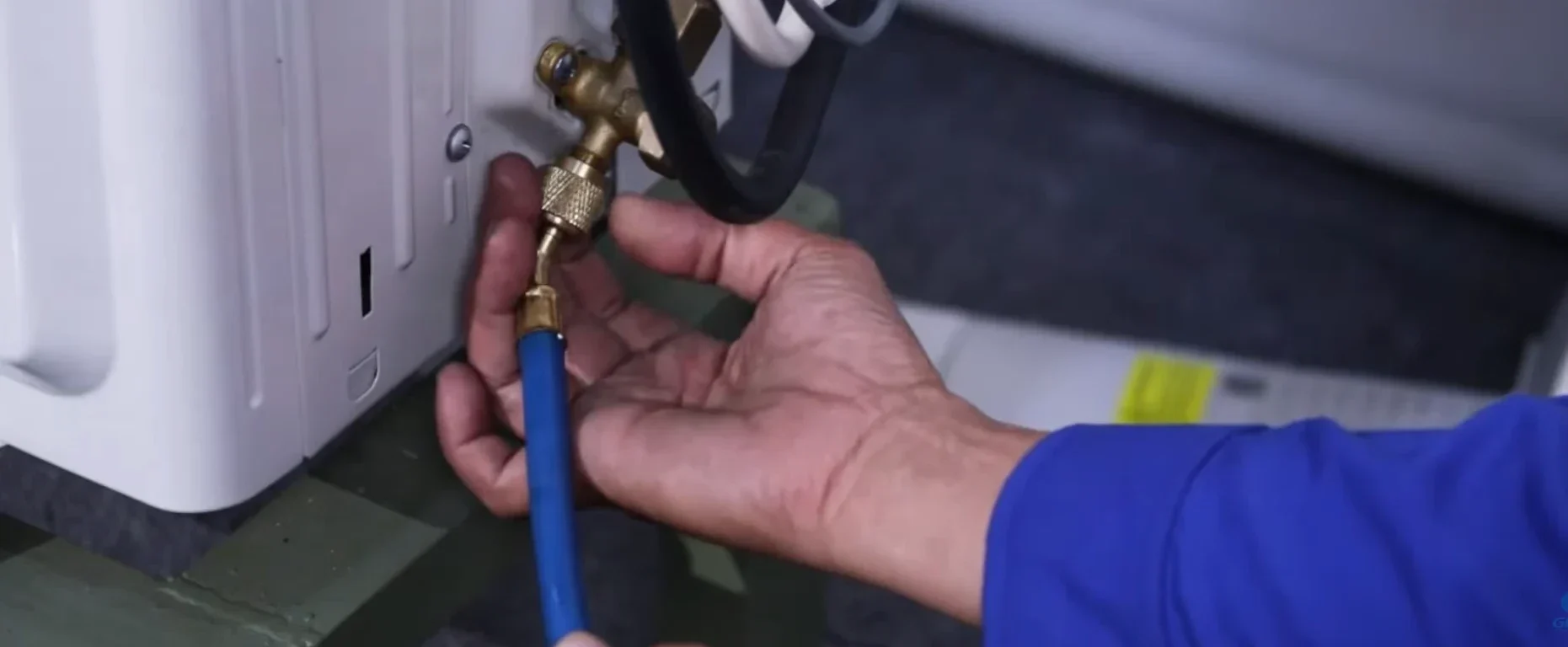
Original electrical panels in the historic Slidell housing stock max out at 60 to 100 amps for the whole house. Modern central AC systems draw 20 to 30 amps at compressor startup on the outdoor circuit alone. The math almost never works without a service upgrade first.
The technicians Aircendro dispatches run the load calculation on the first visit and quote both scopes together, so you see the total investment rather than getting surprised after the AC quote is signed. The panel work is permitted separately from the HVAC install because the code compliance path is different, but both scopes run in coordinated sequence to keep the project moving.
Panel upgrades in historic homes typically complete in one day. The AC install follows once the panel is signed off. Total elapsed time for a shotgun house or cottage on a proper panel upgrade plus ductless mini split install runs three to four business days including inspections.
Historic Home Owner Questions, Answered With Actual OTPDC Detail
These come from actual Olde Towne service and install calls, not a generic HVAC template.
How do I know if my Olde Towne property is a contributing historic building?+
The City of Slidell Planning Department maintains the official Historic Building List at 250 Bouscaren Street. 108 buildings were formally designated on January 3, 2018 based on the Cox McLain survey. You can check the list online through myslidell.com/planning/otpd or call the Planning Department at 985.646.4320. If your building is contributing, the OTPDC Design Guidelines Sections 4.1, 4.2, 5.1, and 5.2 apply to any exterior work including HVAC.
Does Aircendro handle the CA application, or do I file it myself?+
Either. Aircendro can prepare the complete documentation package needed for the CA application, including site plan, product cutsheets, elevation photos, line set routing diagram, and screening plan where applicable. You submit the application yourself to the Planning Department, since the property owner is the applicant of record. We coordinate on the technical content and any Commission questions during review.
Can I install central air in my 1920s cottage, or do I have to do mini splits?+
It depends on the specific home. Louisiana cottages with attic access can sometimes accommodate central ductwork through high-velocity small-duct systems that fit where standard ducts do not. Shotgun houses and small pier-and-beam cottages almost always require ductless mini splits because there is no attic or corridor to run supply and return lines through. The dispatched technician assesses feasibility on the first visit and quotes both options where both are viable.
My property is on Teddy Avenue. Is that in a separate historic district?+
Teddy Avenue has its own Teddy Avenue Residential District listed on the National Register of Historic Places. If your address is on Teddy Avenue and is inside the Olde Towne Preservation District boundary, both the OTPDC review and any National Register considerations may apply. The Planning Department at 250 Bouscaren can confirm which reviews apply to your specific address before you start the project.
Does the CA process actually stop work, or is it just paperwork I can skip?+
The CA is legally required before the city Planning Department will issue the building permit for the HVAC work. Skipping it means no permit, and no permit means the installation is not code compliant. It also creates a real problem at property sale time when the missing permit shows up on the title search. The three to four week CA timeline is worth the compliance.
What if the OTPDC denies my CA for the placement I want?+
Denials usually come with specific recommendations for what would be acceptable. The most common denial reasons are front elevation placement, unscreened side yard placement, or unpainted line set covers. Aircendro re-scopes the install to the recommended alternative and resubmits. The Commission also considers Certificates of Hardship for cases where the standard placement is not physically feasible.
How long does the whole timeline take from first call to working AC?+
For a same day repair on an existing system, minutes to hours. For a full new install with panel upgrade and CA process on a contributing property, three to four weeks from the initial estimate to a running system. That breaks down as one week for CA prep, two to three weeks for OTPDC review, then two to four days of actual work including panel upgrade, HVAC install, and final inspection.
Can I get emergency AC dispatch for my Olde Towne home outside business hours?+
Yes. Emergency dispatch runs 24 hours a day, seven days a week for total system failure in extreme heat. Repairs to existing installed equipment do not require CA review, so the emergency response is the same as anywhere else in Slidell. The CA process only applies to new exterior installations or exterior alterations, not to repair of what is already there.
Get an OTPDC Fluent HVAC Technician Dispatched to Olde Towne Today
Call Aircendro for same day AC repair across Olde Towne Slidell and the surrounding original blocks. Calls route to technicians who understand the Preservation District Design Guidelines and who have shepherded CA applications through the OTPDC process before.
For new installations, request a free historic home estimate. The dispatched technician walks the house, evaluates panel capacity, checks structural feasibility for the install type, and prepares the CA documentation package your property owner submission will need.
Aircendro dispatches across the full Slidell HVAC service area from Gause Boulevard East. Ten to fourteen minute response window to Olde Towne, seven days a week.